
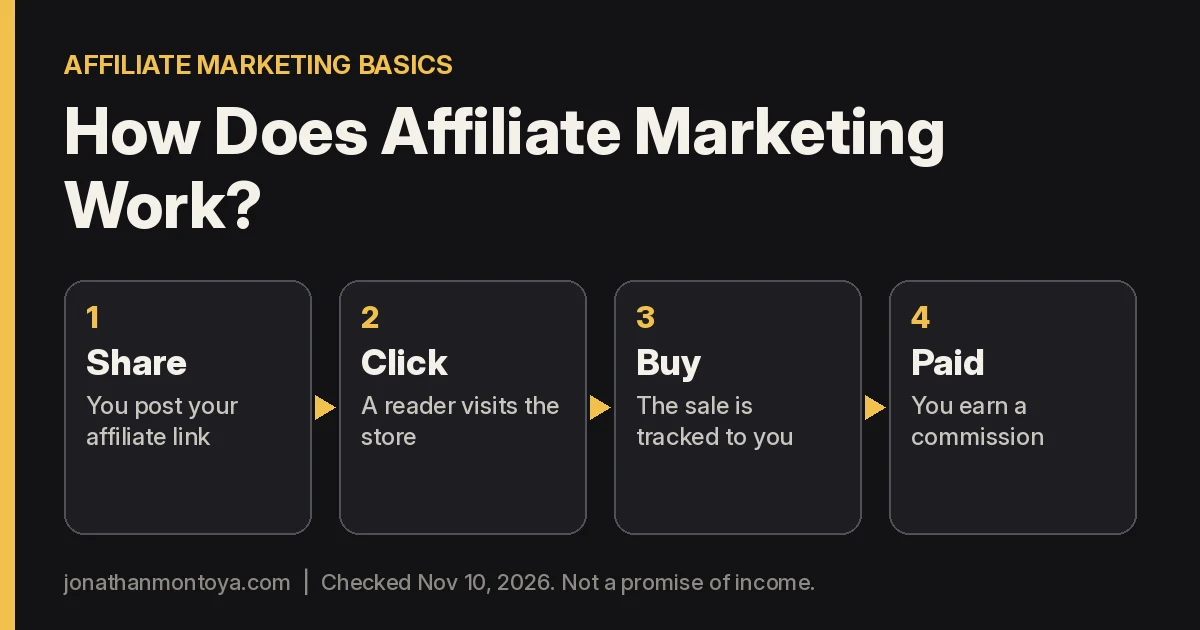
How does affiliate marketing work? You share a special link to a product. When someone buys through your link, the company pays you a part of the sale. That part is called a commission.
This guide explains it in plain words. You will see who is involved, how the tracking works, what kinds of products you can promote, and how to start without a big audience.
This guide is not a promise of income. What you earn, if anything, depends on your work, your audience and the offers you pick.
Want a done-for-you affiliate system? Try the free GHL Clone.
The GHL Clone is a free, done-for-you affiliate system I spent 11 months building. You copy it in about 5 minutes, add your own affiliate link and share it. There is no website to build and no emails to write.
When people sign up through your link, you earn a commission. How much you earn depends on your own work, so I cannot promise any income.
The system is free, but it unlocks when you start a free trial of GoHighLevel, the software it runs on, through my link.
Disclosure: the GHL Clone is my own system, and I earn a commission if you later pay for GoHighLevel.
What is Affiliate Marketing
Affiliate marketing is a way to earn a commission by sharing other people’s products. You are the middle person. You connect buyers with products they want.
When someone buys through your unique affiliate link, you earn a part of the sale. That is your commission.
Here is how it works:
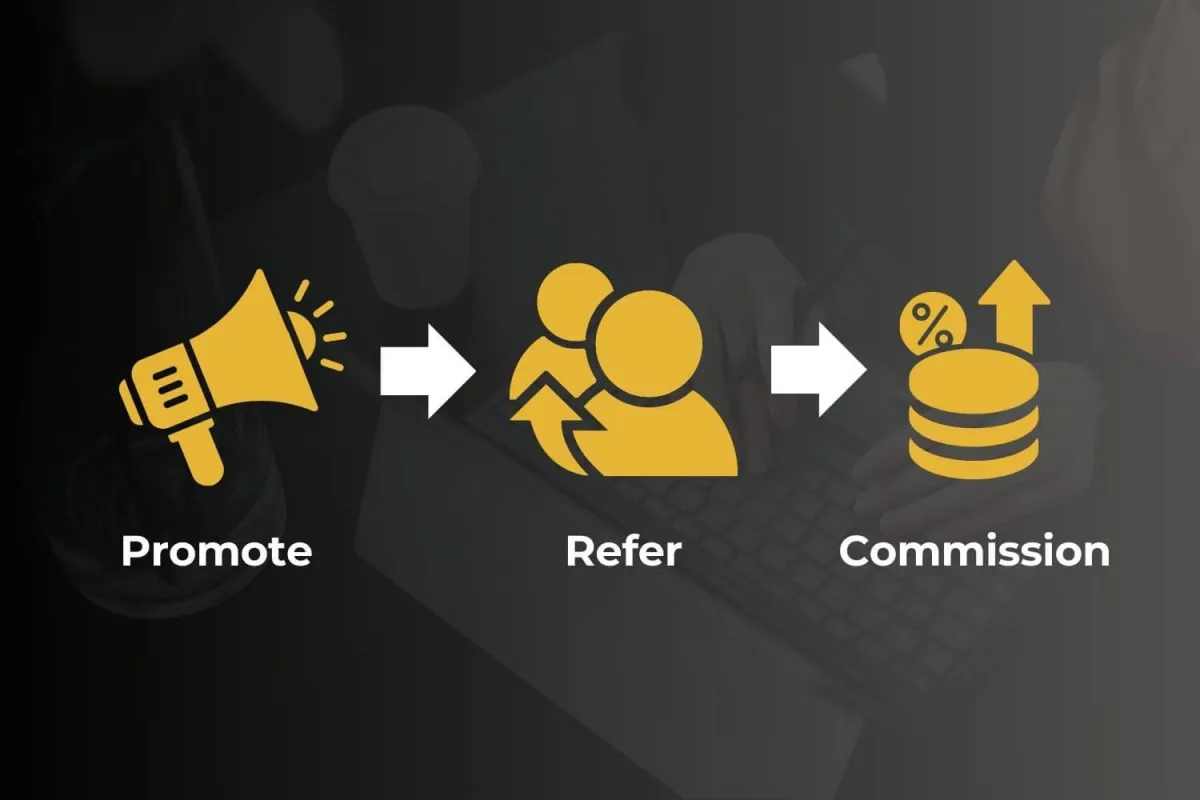
Promotion: You share a product on a blog, on social media or in an email. You add your unique affiliate link.
Referral: When someone clicks your link, they go to the company’s website. If they buy, the sale is tracked back to you.
Commission: You earn a commission when a sale is tracked to your link. The rate depends on the product and the program.
Disclosure: You tell people you may earn money from your link. In the United States, the FTC says this kind of connection must be disclosed “clearly and conspicuously.” A short line near the link, like “I earn a commission if you buy through my link,” works.
Why Affiliate Marketing
There are many ways to build a business online, like selling your own products or doing freelance work. Here is why many beginners start with affiliate marketing:
No Product Creation: You do not need to make your own product.
No Shipping: The company packs, ships and handles returns.
No Customer Support: The company answers product questions.
Refunds: The company handles refunds. If a buyer gets a refund, you usually lose the commission on that sale.
Types of Products in Affiliate Marketing
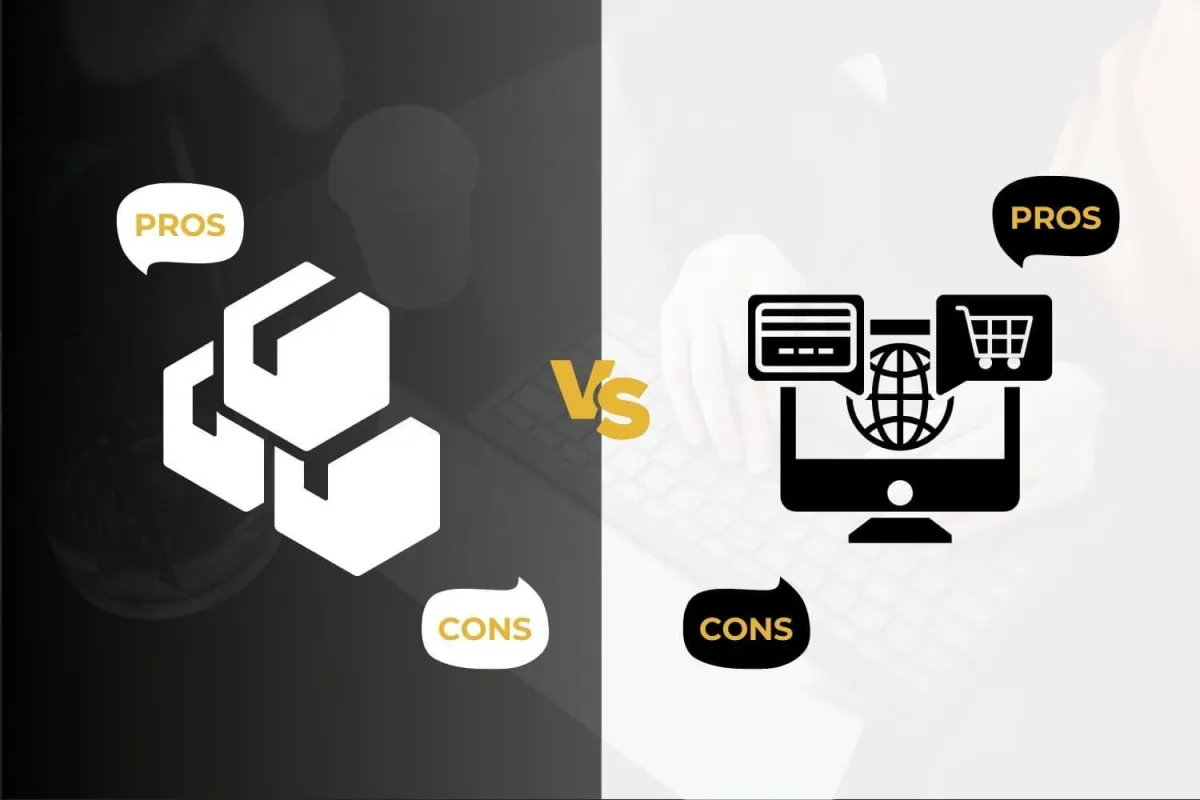
There are two main kinds of products you can promote: physical products and digital products. Before you pick, choose a niche.
Many affiliates also use AI to plan and make content. See my guide to AI tools for affiliate marketing.
First, Pick a Niche
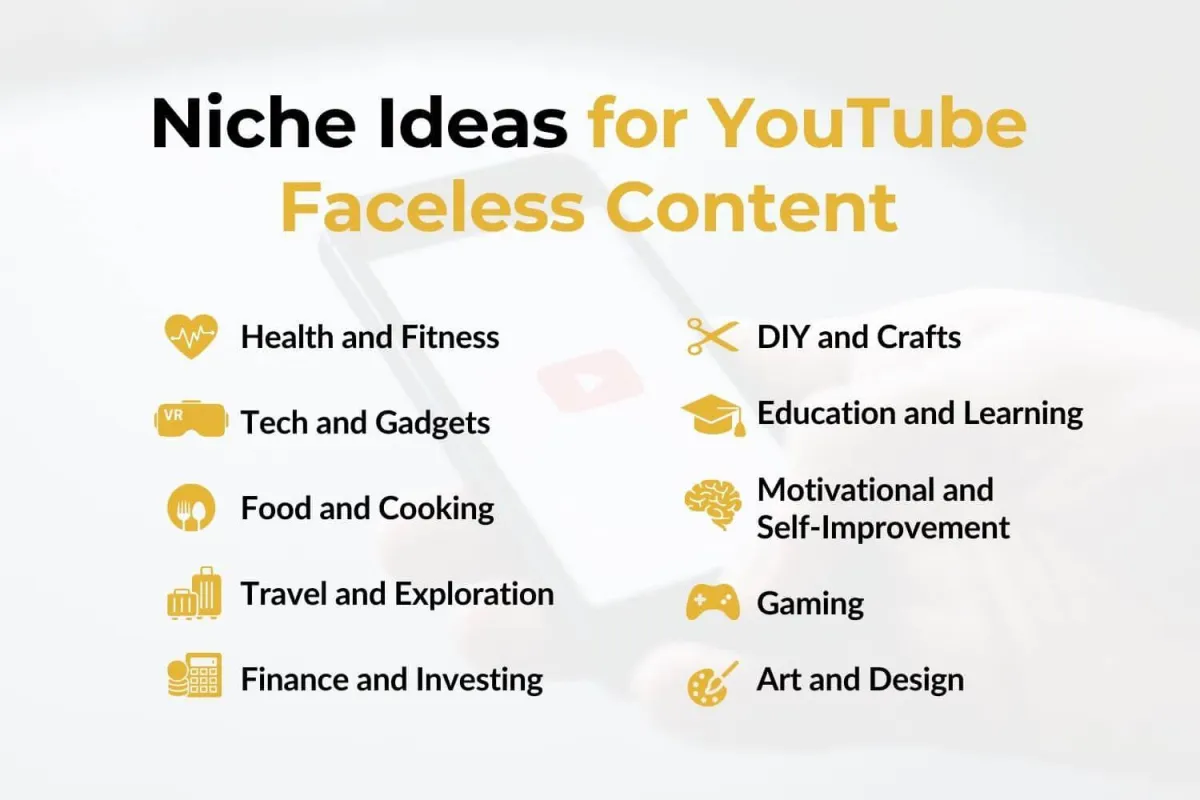
Before you make content, pick your niche. This matters even more in faceless affiliate marketing.
A clear niche helps you focus. You know what to make and who it is for.
What is a niche? It is one topic inside a bigger subject. For example, instead of all of “travel,” you could pick “budget travel” or “luxury travel.”
Why does it matter? When you stick to one topic, people know what to expect from you. That makes it easier to earn their trust.
Physical Products
Physical products are things you can hold, like a blender or a pair of shoes. Stores like Amazon pay a commission when someone buys one through your link.
Pros:
Simple to Explain: People already know many of these products and brands.
Easier Sales: A known brand can be an easier yes, if your audience trusts your advice.
Trust: Many shoppers like to buy from brands they know.
Steady Demand: People buy everyday items again and again.
Lots of Choice: There are products for almost every niche.
Cons:
Lower Rates: Physical products often pay less than digital products. Amazon’s US rates run from 0% to 10%, based on the category.
Shipping Costs: Shipping adds to the price, which can stop some people from buying.
Stock Issues: If an item is out of stock, you can miss the sale.
Slower Decisions: People take longer to decide on pricey items.
Returns: If a buyer returns the item, you usually lose that commission.
Digital Products
You can also promote digital products, like online courses, ebooks or software.
Digital products often pay higher rates. Some software programs also pay recurring commissions. That means you can earn a cut each month the customer keeps paying.
Pros:
Higher Rates: Sellers on marketplaces like ClickBank set their own rates. ClickBank’s affiliate page lists up to 90% as a potential commission.
Instant Delivery: Buyers get the product right away.
Lower Costs: There is nothing to ship, so sellers can often pay affiliates a bigger share.
Recurring Commissions: Some subscriptions pay you each month the customer stays.
Many Niches: Marketplaces like ClickBank and Digistore24 list products in many topics.
Room to Grow: You can add more products over time as you learn what your audience wants.
Sold Worldwide: Many digital products can be bought from anywhere.
Helpful Content: Good courses and ebooks can teach your audience something useful.
Many Ways to Share: You can use a blog, social media or email.
Cons:
More Competition: Many affiliates promote the same popular products.
Crowded Niches: Big niches like health and money are hard to stand out in.
Tech Problems: Bugs or outages can lead to unhappy buyers and refunds.
Piracy: Illegal copies can cut into sales.
Quality Risk: If the product is bad, it hurts your name too.
Fast Changes: Tools and trends change fast, so you have to keep learning.
More Work to Sell: Some products need more teaching before people buy.
Popular Affiliate Marketing Networks
Affiliate networks sit between companies and affiliates. They give you one place to find products and get your links.
Most networks also give you reports so you can see your clicks and sales.
Amazon Associates
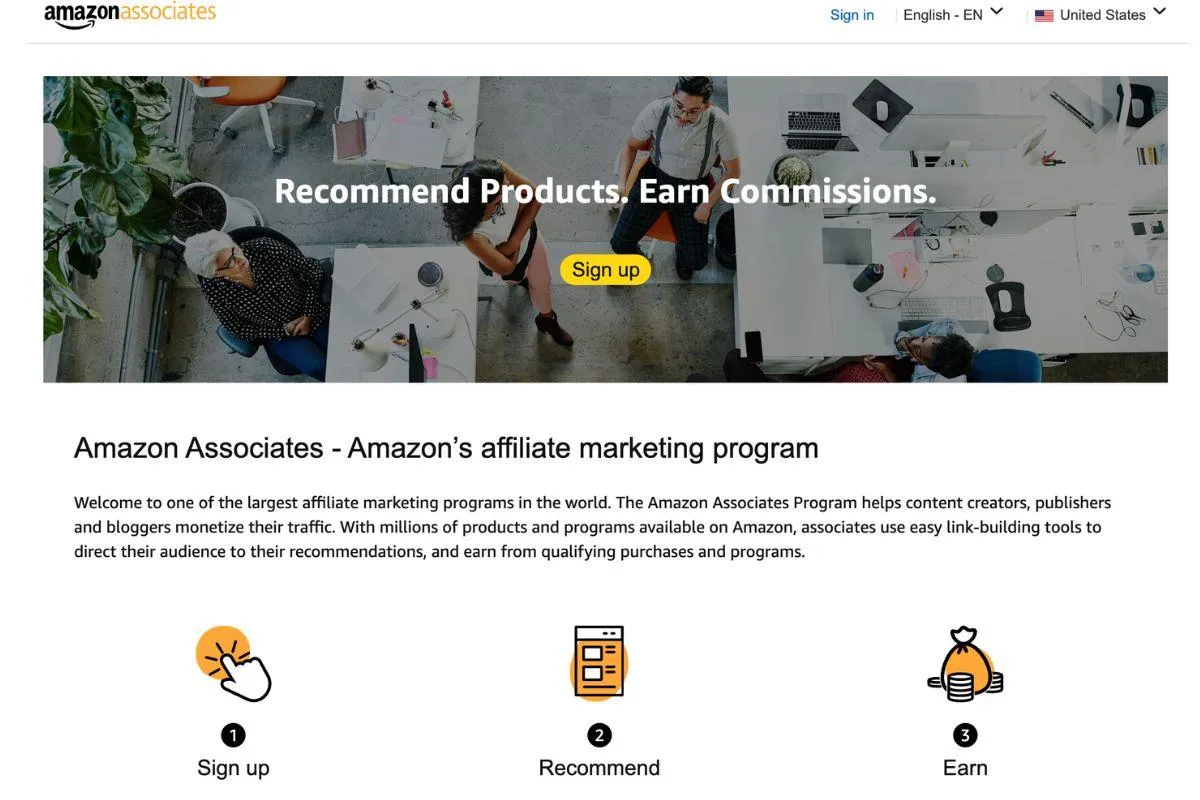
Amazon Associates is Amazon’s own affiliate program. It is a common place to start with physical products, because you can link to almost anything Amazon sells.
Benefits of Amazon Associates
Wide Product Range: Amazon sells products in almost every category.
Trusted Brand: Many shoppers already know and trust Amazon.
Easy Checkout: Many shoppers already have an Amazon account, so buying is simple.
Simple Setup: Signing up and making links is beginner friendly.
Joining the Program
To join, visit the Amazon Associates website, click Sign up, and follow the steps.
Once you are in, you can make links for products. When someone buys through your link, Amazon tracks the sale and pays you a commission.
Commission Rates
Amazon’s US fee schedule lists fixed rates from 0% to 10%, based on the product category. For example, it lists 10% for luxury beauty, 4.5% for physical books and kitchen, 3% for toys and home, and 4% for all other categories.
The rates are low. But many shoppers already trust Amazon, which can make a sale easier.
Clickbank

ClickBank is a big marketplace for digital products. It has software, online courses, ebooks and membership sites. ClickBank says it lists more than 4,000 products.
You can find products on many topics, like business, cooking and tech. So you can pick products that match your niche.
Benefits of Using ClickBank
High Rates: Sellers set the rate for each product. ClickBank’s affiliate page lists up to 90% as a potential commission.
Easy to Use: You can browse products, track results and manage your links in one place.
Reports and Training: You get sales reports, and ClickBank offers training for affiliates.
How to Start with Clickbank
Make an Account: Go to the ClickBank website and sign up for a free account.
Look Around: Log in and browse the products in your niche.
Pick Products: Choose products that fit your niche. Look at each product’s gravity score and commission rate.
Get Your Links: Make a “HopLink” for each product. This is the link that tracks your sales.
Share Them: Use a blog, social media or email. Make helpful content that explains the product.
Digistore24
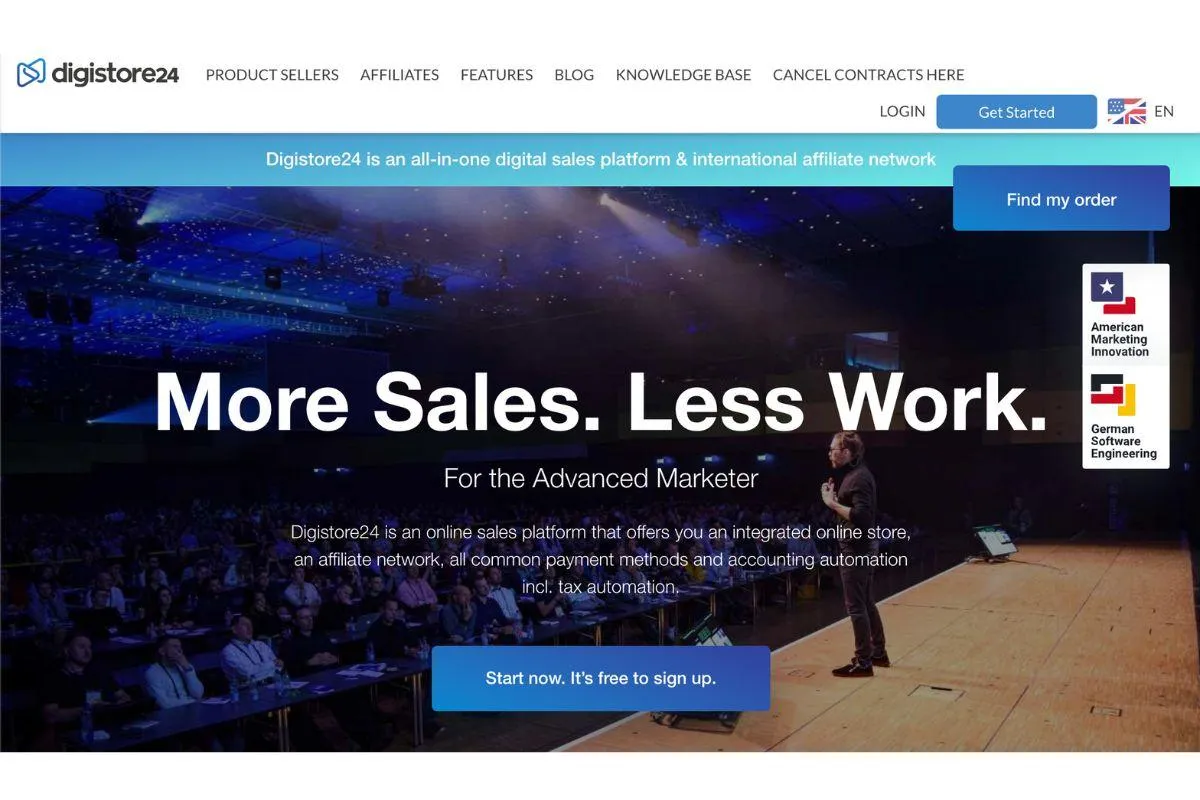
Digistore24 is another marketplace for digital products. It says it has more than 10,000 offers and 125,000+ active affiliates, and it works around the world.
Benefits of Using Digistore24
Free to Join: Digistore24 says there is no setup fee.
Simple Dashboard: You can find products, make links and see your sales in one place.
Fast Payouts: Digistore24 says you can get paid up to 3 times a week.
How to Start with Digistore24
Sign Up: Make a free account on the Digistore24 website and choose “Affiliate” as your role.
Browse: Log in and look at products like software, courses and ebooks.
Pick Products: Choose products that fit your niche. Check the commission rate and the sales numbers.
Get Your Links: Make a link for each product to track your sales.
Share Them: Use social media, a blog or email to explain what the product does.
Beyond Affiliate Networks: Where to Find Affiliate Programs
Networks make it easy to find products. But many companies run their own programs outside of networks. Here is how to find them.
This video walks through these ideas:
Video note: the dollar figure in the thumbnail is not typical income and not a promise of what you will earn.
Niche-Specific Searches
One simple way to find programs is a search engine like Google.
Search for your niche, not a general topic.
For example, if you like health and fitness, search for “best health affiliate programs.”
These lists often show the rates and rules for each program. Then you can compare which ones fit your audience. Always check the rates on the program’s own page.
Explore Industry-Specific Websites
Many industries have their own websites or forums where companies and affiliates meet.
These sites often list programs that big networks do not.
Joining these groups can also teach you what works in your niche.
Check Company Websites
Many companies run their own programs. Visit the websites of brands you already use and like.
Look for a link called “Affiliates” or “Partners” at the bottom of the home page. Promoting products you already use makes your advice more honest.
Utilize Affiliate Directories
Affiliate directories are lists of programs in many industries. They can save you time.
They often show the commission, the rules and the type of product.
How to Build an Affiliate Business That Lasts
You now know the basics of how affiliate marketing works.
Next is the part that matters most: building something that lasts.
A common mistake is to send people straight to the product with your affiliate link. Here is why that can hurt you:
No Trust: A bare link does not help people get to know you.
No Email List: If you do not collect emails, you cannot follow up later.
Fewer Sales: Without helpful context, fewer people are ready to buy.
Looks Like Spam: A link with no context can look spammy and hurt your name.
No Repeat Contact: You lose the chance to help the same people again.
No Personal Offers: Without a list, you cannot send offers that match what each person needs.
Slower Growth: With no list, every sale depends on finding new traffic.
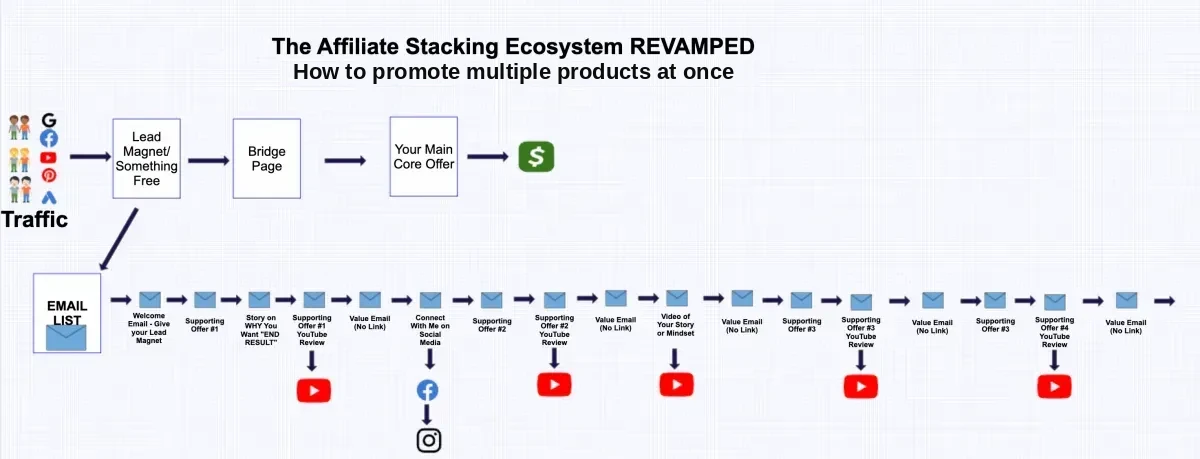
The Affiliate Stacking Ecosystem
To fix these problems, I recommend a method called the Affiliate Stacking Ecosystem.
With this method, you promote more than one product to the same people over time.
Instead of pushing one product, you build an email list. Then you share products that fit what your subscribers need.
The goal is to help your audience with each offer, not to push one product.
The Affiliate Stacking Ecosystem helps you:
Build Trust: Helpful content and honest advice help people trust you.
Collect Leads: Get emails and follow up with helpful messages.
Make Better Offers: Recommend products that fit what each person needs.
Stay in Touch: Keep sharing useful content so people stay with you.
Grow Over Time: Add new products as your list grows.
The system is built around one main offer, with a few related products that support it.
Want a Done-for-You Starting Point?
You have seen how affiliate marketing works, from picking a network to building a list.
Try the free GHL Clone. It is a done-for-you affiliate system you copy in about 5 minutes. It unlocks with a free trial of GoHighLevel, the software it runs on, through my link.
Disclosure: the GHL Clone is my own system, and I earn a commission if you later pay for GoHighLevel.
Want an AI team to help run your business? Meet AIM Agent, an AI Chief of Staff for business owners. I am a co-founder of AIM Agent and have a financial interest in the product.
Want an AI team to help run your business?
Disclosure: I am a co-founder of AIM Agent and have a financial interest in the product.
AIM Agent is an AI Chief of Staff for business owners. It comes with an AI C-suite (COO, CMO, CFO, CRO and CTO), a Business Bot Builder and 100+ business skills, and it runs on AIM OS, a private vault that holds your notes and memory.
Here is what you get:
- An AI Chief of Staff that helps you plan and run your business
- An AI C-suite: COO, CMO, CFO, CRO and CTO
- A Business Bot for each business or project. Give it a real task and it brings the work back for you to review
- 100+ business skills for content, offers, research and more
- Step by step setup guides and email support
About the Author

Jonathan Montoya is a former electrical engineer, husband, dad, and man of faith. He started building online in May 2019, left engineering in March 2020, and has built 3 seven-figure businesses. Today he teaches regular people how to use AI to build a business.
Frequently asked questions
How does affiliate marketing work for beginners?
You share a tracked link to a product. When someone buys through it, you earn a commission.
How do affiliates get paid?
Affiliates are paid by the program or network based on their payout rules and schedule.
Is affiliate marketing legit?
Yes. It is a legitimate business model when you follow the rules and disclose your links.
Do I have to tell people I use affiliate links?
In the United States, yes. FTC rules say a money connection to a brand must be disclosed clearly. Put a short note near the link.
Sources
Checked November 10, 2026. Rates and rules can change.
