
AI Business · Guide
An AI consultant sells advice, not software. You help a business see where AI fits, then help them do it right. Here is how to start, step by step, without overpromising.
Most small business owners know AI matters. They just do not know where to start, which tools to trust, or what is hype. That gap is the whole job of an AI consultant.
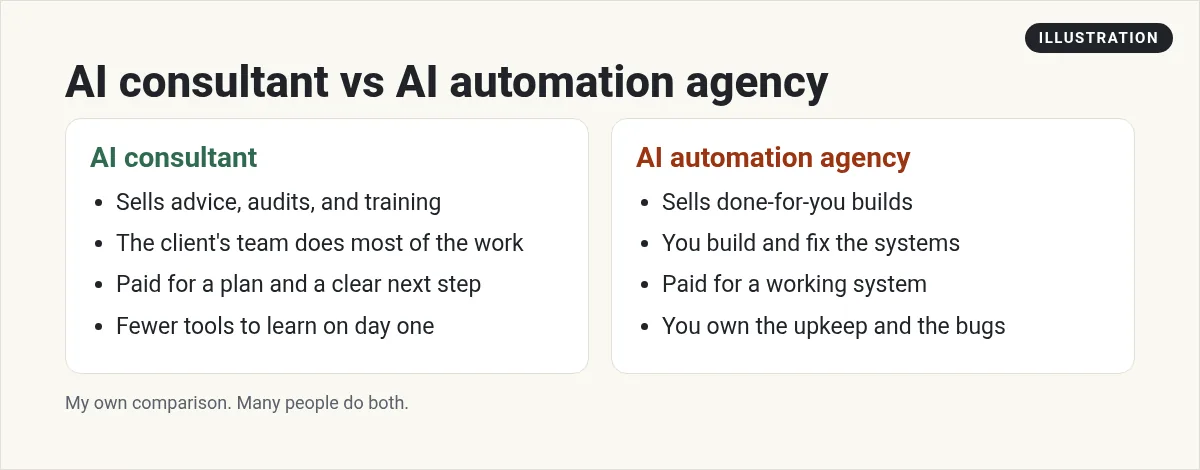
This guide is about the consulting side: audits, plans, and training. If you would rather build and run the systems yourself, that is an agency, and I cover it in my guide to starting an AI automation agency. Many people end up doing a bit of both.
Quick answer
To start an AI consulting business, pick one type of business to serve, learn the few AI tools that matter for them, and sell a small paid AI audit as your first offer. In the audit, map their weekly tasks, pick the top three AI fixes, and hand them a clear plan. Then offer a setup sprint and an optional monthly advisor plan. Never promise results you cannot control. The FTC has taken action against companies using AI hype to mislead people, so keep every claim honest and specific.
What an AI consultant actually does
An AI consultant helps a business answer three questions:
- Where can AI save us time or money?
- Which tools should we use, and which should we skip?
- How do we use them safely, so we do not make a mess?
Your deliverable is usually a plan, a short training, and some hands-on help. The client's own team does most of the day to day work after you leave.
Step 1: Pick one niche
I help businesses with AI is too wide. Nobody hears that and thinks of themselves. Pick one type of business you understand, like dental offices, real estate teams, roofers, or law firms.
Good signs of a niche worth picking:
- They do the same paperwork, emails, or follow ups every week.
- They already pay for software, so they are used to buying tools.
- You have worked in that field or know people who do.
Need ideas? My list of small business AI project ideas is a good place to start.
Step 2: Learn the few tools that matter
You do not need to know every AI tool. You need to know the handful your niche will actually use, and know them well. For most small businesses, that is:
- A chat assistant like ChatGPT or Claude, for writing, summaries, and research.
- An automation tool to move data between apps. See my list of Zapier alternatives.
- The AI features inside tools they already pay for, like their CRM or email platform.
Practice on your own work first. If you cannot use it well, you cannot teach it. My guide to ChatGPT for small business shows the kind of everyday tasks clients care about.
Step 3: Package your offer
New consultants often sell hours. I think that is a mistake. Owners do not want hours. They want a problem solved. Here is a simple ladder I like.
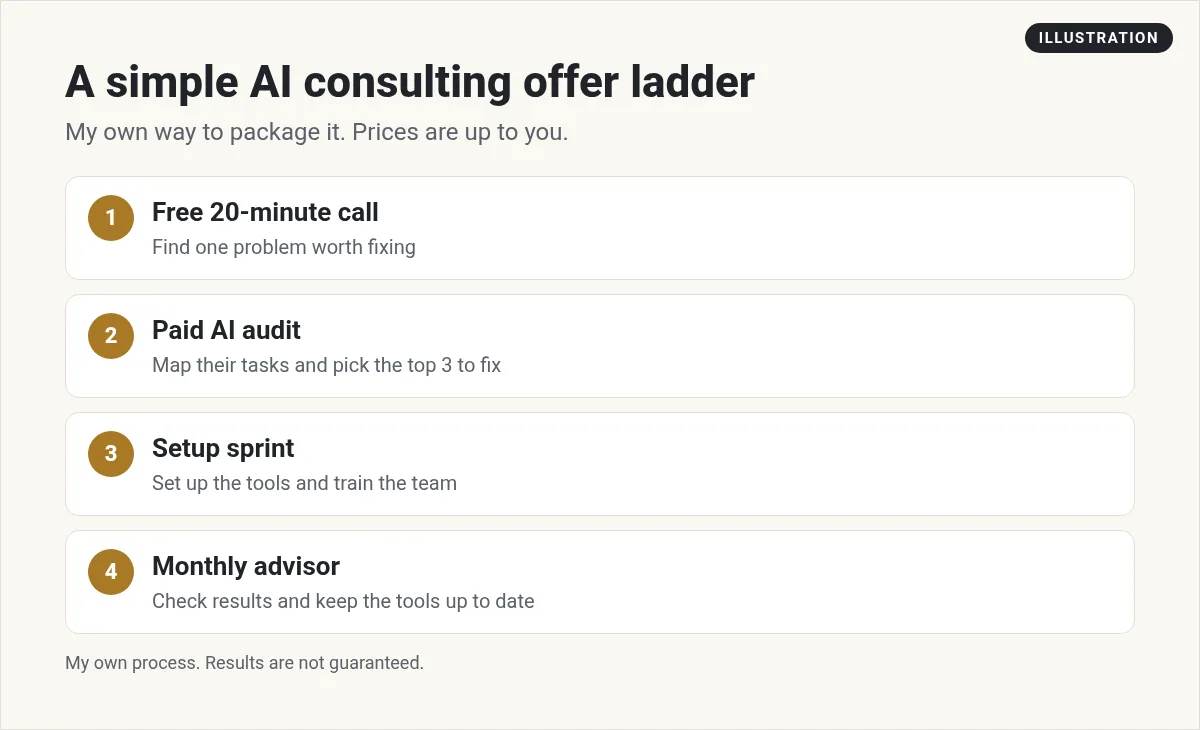
- Free 20-minute call. Find one problem worth fixing. Do not give away the whole plan.
- Paid AI audit. Look at how they work, then pick the top three places AI can help. Deliver a short written plan.
- Setup sprint. Set up the tools from the plan and train the team to use them.
- Monthly advisor. A short check-in each month to review results and keep tools up to date.
What you charge is up to you and your market. Price on how big the problem is for them, not on how long it takes you. And put the scope in writing, so both sides know what is included.
Step 4: Run a great first audit
The audit is where you earn trust. Here is how I would run one:
- Interview the owner and one staff member. Ask what they do every day, what they hate doing, and what falls through the cracks.
- List their weekly tasks. Write each one down with roughly how long it takes.
- Mark the AI fits. Look for writing, sorting, summarizing, answering the same questions, and moving data.
- Pick the top three. Choose the ones that save the most time with the least risk.
- Write the plan. For each fix: the tool, the steps, the cost, and the risks.
- Walk them through it. A short call beats a long document nobody reads.
Step 5: Stay honest about AI
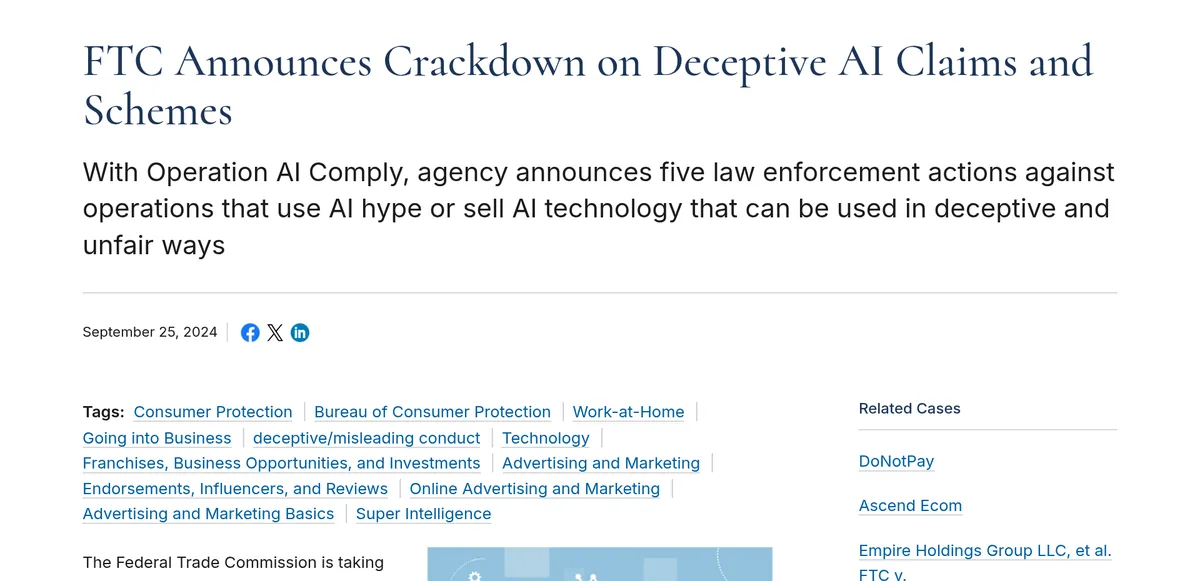
This part protects you and your clients. In September 2024, the FTC announced Operation AI Comply, a sweep against companies that used AI hype to mislead people. Lina M. Khan, the FTC Chair at the time, said there is no AI exemption from the laws on the books.
For a consultant, that means:
- Do not promise a set amount of time or money saved. Say what you will do, not what will happen.
- Do not call a tool a replacement for a lawyer, doctor, or accountant.
- Tell clients that AI makes mistakes, and that a person should check its work.
- Keep client data private. Read each tool's data policy before you put client info into it.
If a client wants a more formal approach to AI risk, point them to the NIST AI Risk Management Framework. It is free and voluntary to use.
Step 6: Land your first client
- Start with people you know. Friends who own businesses, past bosses, your own dentist or gym.
- Offer one or two early audits at a lower price in exchange for honest feedback.
- Show, do not tell. Bring a real before and after from your own work.
- Write short, specific messages. My guide to your first message to a business owner shows how.
Want a list of businesses to reach out to? See how to find your first local businesses.
Step 7: Set up the business side
Keep it simple at first, but do the basics. The U.S. Small Business Administration has free help to plan your business, write a business plan, and work out your startup costs. It also offers free business counseling.
- Pick a name and set up how you will get paid.
- Use a simple written agreement for every client.
- Track your costs, like tool subscriptions. My guide to AI service business costs lists the usual ones.
Watch: starting an AI automation agency
My video: I walk through how to start an AI automation agency with no experience. It is about the done-for-you side, which is broader than consulting, but the steps for picking a niche and finding clients carry over.
Any results mentioned in videos are not typical and are not a promise of income. Your results depend on your work and your market.
What a simple first month can look like
Here is a plan I would follow if I were starting from zero. It is an example, not a promise of how fast clients will come.
- Week 1: pick your niche, and use the core tools on your own work every day.
- Week 2: build your audit template and a one page offer sheet.
- Week 3: reach out to ten owners in your niche that you know or can be introduced to.
- Week 4: run your first audit, ask for honest feedback, and fix your template.
After that, keep a simple log. Write down every call, every yes, and every no. Patterns show up fast, and they tell you what to change.
How to grow past your first few clients
Once a few audits go well, look for the jobs that keep coming back. Those are your best clues.
- Turn repeat questions into a short training. Teach a whole team at once.
- Turn repeat fixes into a standard package. Same steps, same scope, less guessing.
- Ask happy clients for one introduction each. Owners in the same niche often know each other.
- Know when to partner. If a client wants a big custom build, bring in someone who builds, or refer it out.
Mistakes that sink new AI consultants
- Chasing every new tool. Clients pay for results, not for you knowing the latest launch.
- Giving the plan away on the free call. Find the problem, then sell the audit.
- No written scope. Without it, a small job turns into endless free work.
- Overpromising. One broken promise costs you more than ten honest maybes.
My AI consulting launch list
Nothing you check here is sent or saved. Download it if you want to keep it.
Meet AIM Agent
AIM Agent is an AI Chief of Staff for business owners. You give it a real task, and it brings the work back for you to review. You stay the one who approves.
Meet AIM AgentI am a co-founder of AIM Agent and have a financial interest in the product.
Frequently asked questions
What does an AI consultant do?
An AI consultant helps a business find where AI can save time, pick the right tools, and use them safely. The work is usually audits, plans, and training.
Do I need a tech degree to be an AI consultant?
No. You need to know a few tools well and understand how your clients' businesses run. Practice on your own work first.
What is the difference between AI consulting and an AI automation agency?
A consultant sells advice and training, and the client's team does the work. An agency builds and runs the systems for the client.
What should my first AI consulting offer be?
A small paid AI audit. Map the client's weekly tasks, pick the top three AI fixes, and deliver a clear written plan.
How much should I charge for AI consulting?
That depends on your market and the size of the problem you solve. Price on the value of the fix, not your hours, and put the scope in writing.
Are there rules about making AI claims?
Yes. The FTC has taken action against companies that used AI claims to mislead people. Never promise results you cannot control.
Sources
Checked October 21, 2026. Plans, prices, and rules can change.
