
Grok Bot · Performance Marketing
Paid media is a lot of clicking. Here is how a small team uses Bots for the prep, pacing, and reporting, while humans keep the budget calls.
Grok Bot for performance marketing is about standing up an ad program without drowning in planners, naming sheets, and can you pull requests. A Bot team can research demand, draft the media mix, build campaign shells, and watch spend every morning. You still decide what to scale.
I read the x.ai guide Grok Bot for Performance Marketing by Miguel Cruz, dated October 5, 2026, plus the Grok Bot docs use cases page (Paid media) on November 5, 2026. I also watched a paid social creator build a full campaign with Bots. Here is the playbook you can copy.
TL;DR
Grok Bot can help performance marketers with demand research, budget and channel mix drafts, campaign shells, creative briefs, conversion checks, and daily pacing reports. The x.ai Performance Marketing guide says bots get you to a strong v1 on planning, then humans make the strategic calls. Keep budget changes and live buys behind approval.
Why performance marketing fits Grok Bot
Every ad channel has its own goals, naming rules, and targeting. There is no single API that covers all of it. The Performance Marketing guide says that is why it matters that Bots have their own computer. They work inside the platforms the same way you do, then hand back the part that needs a decision.
The Grok Bot docs use cases page lists Paid media as a fit when the Bot owns a repeatable outcome, like a morning pacing check or a weekly search coverage pass, not a vague ask to make ads better.
How to launch a new program with Bots
Miguel's guide walks through going from zero to a live program. Most of the prep that used to take weeks can be drafted by Bots first:
- Demand research. A Bot pulls search volume, flags non brand coverage gaps, and summarizes what competitors are running. You read it and pick the path.
- Budget and media mix. Give a Bot a target CAC and it drafts what captures demand, what creates it, what is held for testing, and whether each line has enough weight to exit learning.
- Channel mix and naming. After budgets are confirmed, a Bot drafts campaign structure and a naming convention so reporting stays easy.
- Copy and creative. Channel Bots take a first stab that respects character limits. A project manager Bot turns approved copy into a brief and pings design.
- Conversion tracking and reporting. A dedicated Bot stands up events and builds a v1 reporting sheet before anyone asks for numbers.
Bots do not replace the media buyer. They clear the prep so the buyer spends time on judgment.
Four Bots worth copying
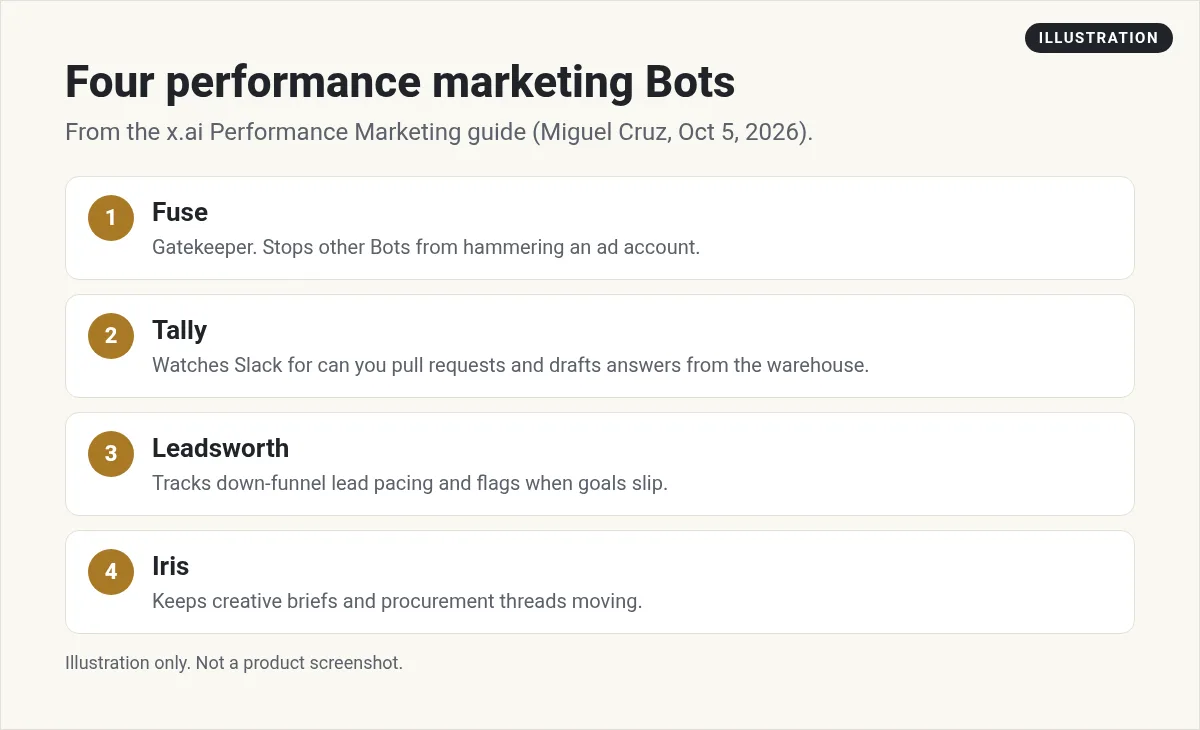
The guide shares four internal Bots with templates:
- Fuse. The gatekeeper. It stops other Bots from clicking around an ad account too hard or firing APIs hard enough to risk a ban. Set this up first if you will scale.
- Tally. Watches Slack for can you pull requests and drafts a response from the data warehouse. If the warehouse is missing a number, it falls back to the platform login.
- Leadsworth. Tracks down funnel lead performance against the lead goal and attaches recommendations when pacing is off.
- Iris. Keeps creative, procurement, and project threads from dying in Slack so ads ship faster.
Once the program is live
After launch, the weekly jobs matter more than the 0 to 1 work. The guide lists these standing jobs:
- Daily spend and conversion checks by channel. Ping only when something is off: double daily spend, zero spend, or conversions dropping to zero because a tag stopped.
- Reporting asks answered without you. Tally drafts the answer so a question at 11 AM does not wait until you leave meetings.
- Lead pacing. Leadsworth flags when persona mix or goals need a human call.
- Search coverage after product ships. Once a week, a Bot reads the changelog and checks whether Search covers what is new.
- Creative coordination. Iris keeps briefs moving so shipping is not stuck in a thread.
From the Mr. Paid Social channel (not mine): A paid social creator walks through building a campaign with Grok Bot. Treat results claims as his story, not a promise.
Any results mentioned in videos are not typical and are not a promise of income. Your results depend on your work and your market.
Where to start this week
Miguel's advice matches what I tell teams:
- Start with reporting. It is the easiest handoff and buys time for everything else.
- Connect Slack, Sheets, Notion, and the ad platform where most budget sits.
- Write each Bot like a job description: what it owns, the KPI, and where it must stop and ask.
- Give it one channel before six. A Bot that knows one platform cold beats a vague generalist.
- Keep platform actions as drafts for the first few weeks.
- Put anything that touches an API behind a gatekeeper before you scale.
My Grok Bot Google Ads and Grok Bot Meta Ads posts cover channel specific setups. This post is the team pattern around them.
What you should still do yourself
Budget between personas is still your call. So is when a boosted post is fatigued. The guide is clear: bots draft and watch, humans decide. Do not let a Bot change live budgets until you have watched it draft correctly for weeks.
One channel Bot before six
Miguel is clear that a Bot that knows one platform's character limits, structure, and quirks ends up more useful than one that is vaguely familiar with six. That matches how you would hire a media team. Start with the channel where most budget sits. Teach it your naming rules, your negative keyword habits, and your approval line. Only then clone the pattern for the next channel.
For Search, that might mean match types and how negatives are structured. For LinkedIn, the lead funnel and what a message ad should look like. Write those rules into a skill so every draft uses them. My Grok Bot skills post shows how to save a skill once and reuse it.
Copy and paste prompts to try
Every weekday at 7 AM, check spend and conversions for each connected ad channel against the monthly budget and the last 7 days. Only message me if spend is about double the daily pace, spend is zero, or conversions dropped to zero. Include the channel, the number, and one likely cause. Do not change budgets.
Read this week's product changelog. List new features that Search does not cover yet. Suggest campaign and ad group mapping in a sheet. Do not create campaigns.
You are Fuse. Before any other Bot calls an ads API or bulk edits an account, they must ask you first. If a request looks like rapid fire changes, pause it and ask me.
Your first two weeks
- Days 1 to 2. Connect Slack, Sheets, and one ad platform. Create a reporting Bot only.
- Days 3 to 5. Run daily pacing checks as drafts. Compare them to your own spreadsheet.
- Week 2. Add Fuse before any Bot can edit an account. Add Iris for creative briefs if design is the bottleneck.
- Week 3. Add Leadsworth once lead goals are clear. Keep budget moves as human only.
If a Bot draft is wrong, fix the instructions and the skill. Do not keep hand editing the same mistake.
A business team around your paid media
Media buying is one seat. Offers, content, and follow up need owners too.
AIM Agent is an AI Chief of Staff for business owners. It comes with an AI C-suite (COO, CMO, CFO, CRO and CTO), a Business Bot Builder and 100+ business skills, and it runs on AIM OS, a private vault that holds your notes and memory. AIM Agent is a ready-made AI business team that works inside Grok Bot, so you skip the setup and get to work.
Here is what you get:
- An AI Chief of Staff that helps you plan and run your business
- An AI C-suite: COO, CMO, CFO, CRO and CTO
- A Business Bot for each business or project. Give it a real task and it brings the work back for you to review
- 100+ business skills for content, offers, research and more
- Step by step setup guides and email support
So your ads point at a business that can keep up.
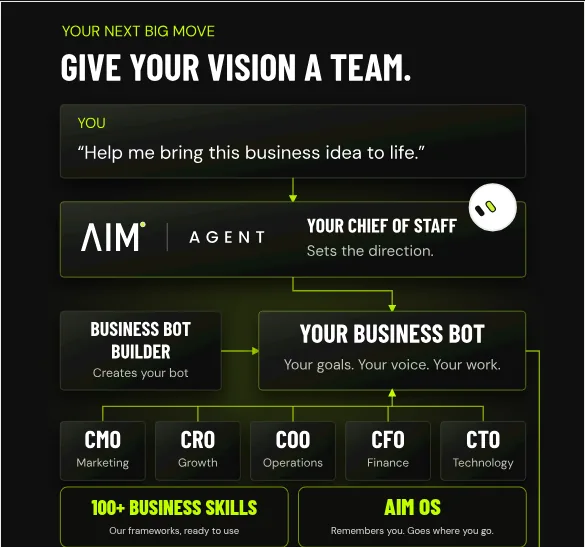
Want an AI team to help run your business? Meet AIM Agent, an AI Chief of Staff for business owners. I am a co-founder of AIM Agent and have a financial interest in the product.
Get a business team inside Grok Bot
AIM Agent gives you an AI Chief of Staff, an AI C-suite, and 100+ business skills, so marketing, sales, and ops each have an owner.
See AIM AgentFrequently asked questions
Can Grok Bot change my ad budgets on its own?
Only if you tell it to. The Performance Marketing guide keeps guardrails so nothing changes without approval.
What should I automate first?
Reporting. It is the easiest start and frees time to build the rest.
Do I need a Bot per channel?
Not at first. Grow into specialists once one channel Bot is trusted.
How is this different from a dashboard?
A dashboard waits for you. These Bots sign in, run on a schedule, and post when the job is done or a source fails.
Will Bots get my ad account banned?
That is why Fuse exists. Put API heavy work behind a gatekeeper Bot.
Can it build creatives?
It can draft briefs and copy. Design and final creative judgment stay with your team.
Is there a faster way to get a business team?
AIM Agent gives you an AI Chief of Staff, an AI C-suite, and 100+ business skills inside Grok Bot.
Sources
Checked November 5, 2026. Plans, prices, and rules can change.
