
Affiliate Marketing · Guide
An affiliate disclosure is a short, plain note that you may get paid when someone buys through your link. Here is what the FTC says, where to put it on each platform, and examples you can copy.
If you share affiliate links, you need to tell people. It is not just a nice thing to do. In the US, the FTC expects it, and many affiliate programs, like Amazon Associates, require it too.
The good news: a good disclosure is short and simple. I read the FTC's guidance pages on October 25, 2026. Here is what they say, in plain words, with examples for each place you post. This is general info, not legal advice.
Quick answer
An affiliate disclosure is a clear statement, placed right next to your affiliate link or recommendation, that says you may get paid if people buy. The FTC says it should be easy to see and understand, placed with the endorsement itself, and not hidden on an About page, at the end of a post, behind a MORE click, or in a group of hashtags. In videos, say it out loud and show it on screen. A simple example: I may get a commission if you buy through my link.
What an affiliate disclosure is
When you share an affiliate link, the company pays you if someone buys. That is a money tie to the brand. The FTC calls this a "material connection."
Its guide for creators says a material connection includes a financial relationship, such as the brand paying you or giving you free or discounted products or services. An affiliate commission fits that.
A disclosure simply tells people about that tie, so they can decide how much weight to give your advice. If you are new to links, my guide to the affiliate link explains how they work.
Why you still need one if it seems obvious
A common thought is that everyone knows creators get paid for links. The FTC answers this head on in its Q&A. It says some creators get paid this way and others do not, and the deal "may be apparent to some people, but not to everyone." That is why you still disclose.
Also, you should not count on others to do it for you. The FTC guide says "it's your responsibility to make these disclosures."
The FTC's main rules, in plain words
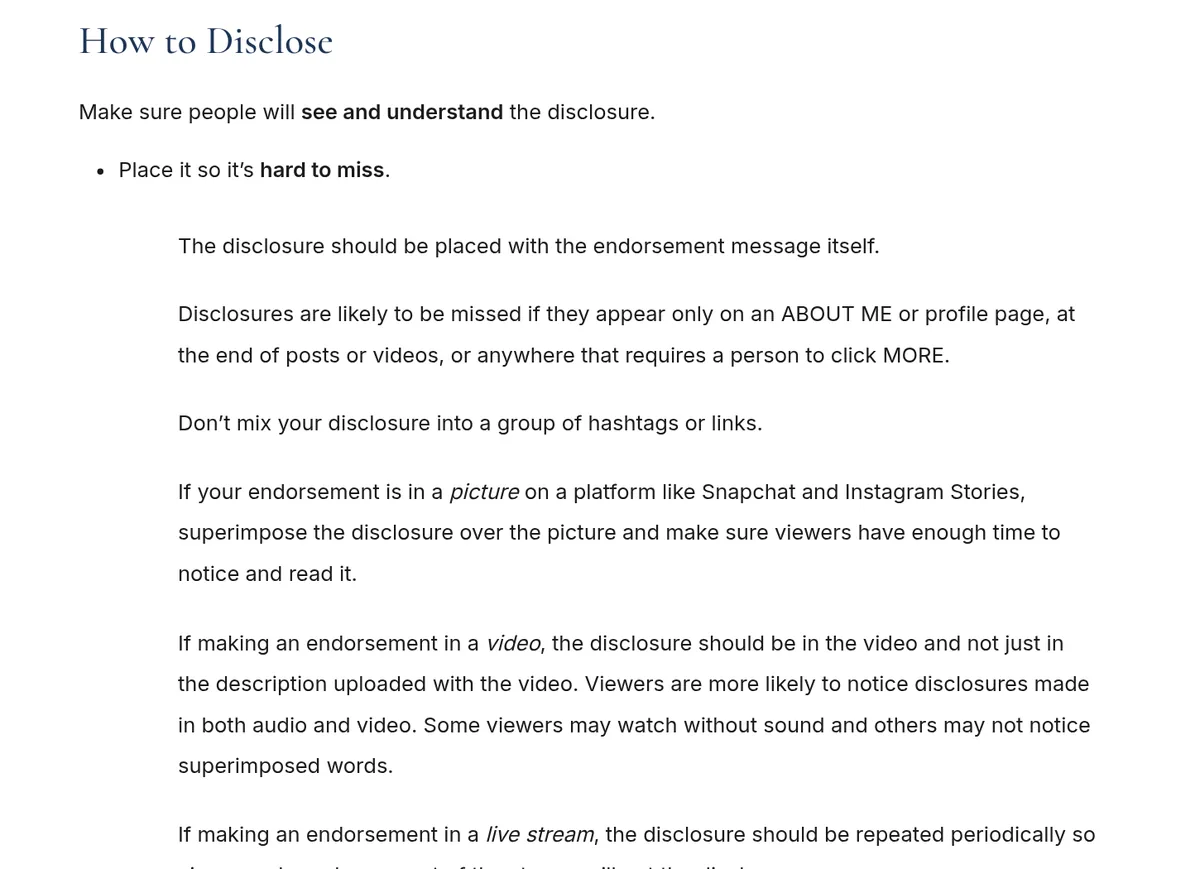
- Put it with the recommendation. "The disclosure should be placed with the endorsement message itself."
- Do not hide it. The FTC says disclosures are likely to be missed on an About Me or profile page, at the end of posts or videos, or anywhere that needs a MORE click.
- Do not bury it in hashtags. "Don't mix your disclosure into a group of hashtags or links."
- Use plain words. Terms like ad and sponsored work. Avoid vague ones like sp, spon, or collab.
- Use the same language as your post. If you post in Spanish, disclose in Spanish.
- A link to a disclosure is not enough. The FTC says a button that says DISCLOSURE and links to a full note "is easily avoidable."
Where to put your disclosure on each platform
Blog posts
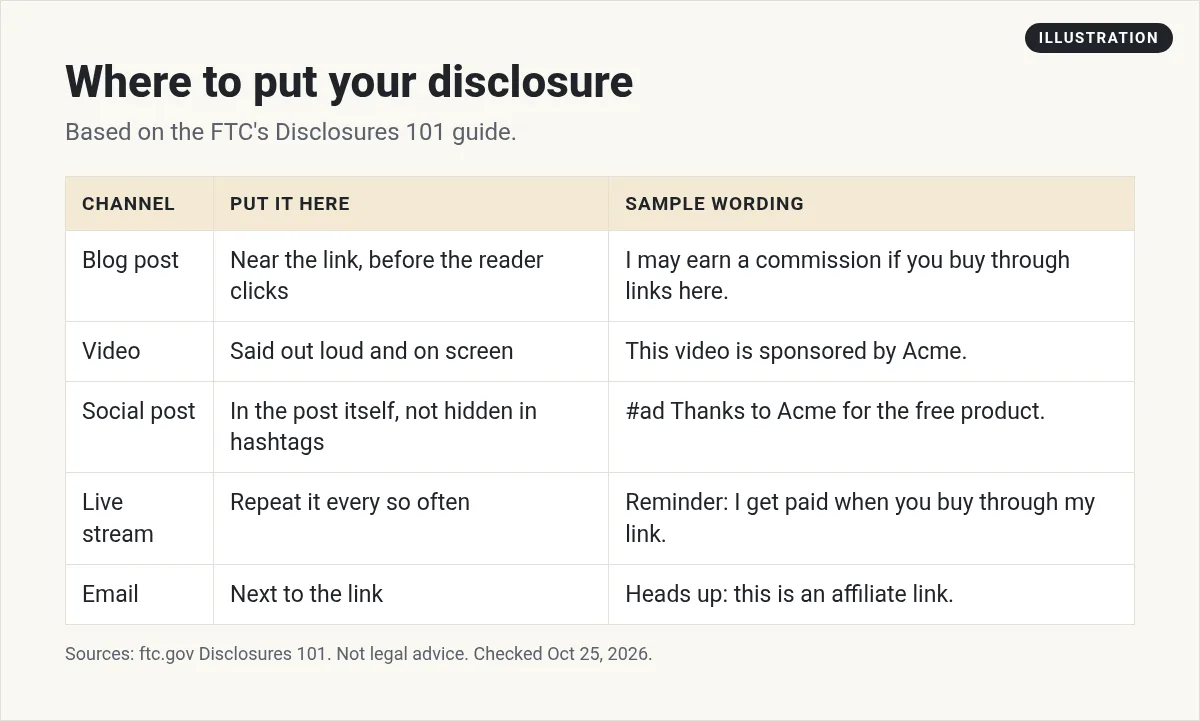
Put a short note near the top, before the first affiliate link, and a short note next to each main link or buy button. The FTC's Q&A says a disclosure is more likely to be seen if it is very close to, or even better, part of the recommendation it relates to.
A footer note alone is not enough, because many readers never scroll that far.
YouTube and other videos
Say it out loud and show it on screen. The FTC says viewers are more likely to notice a disclosure made in both audio and video.
Put it at the start, or right before you talk about the product, and repeat it if the video is long. Then also add it to the description near the links. The FTC Q&A says to disclose "both in the videos and in the description near the links."
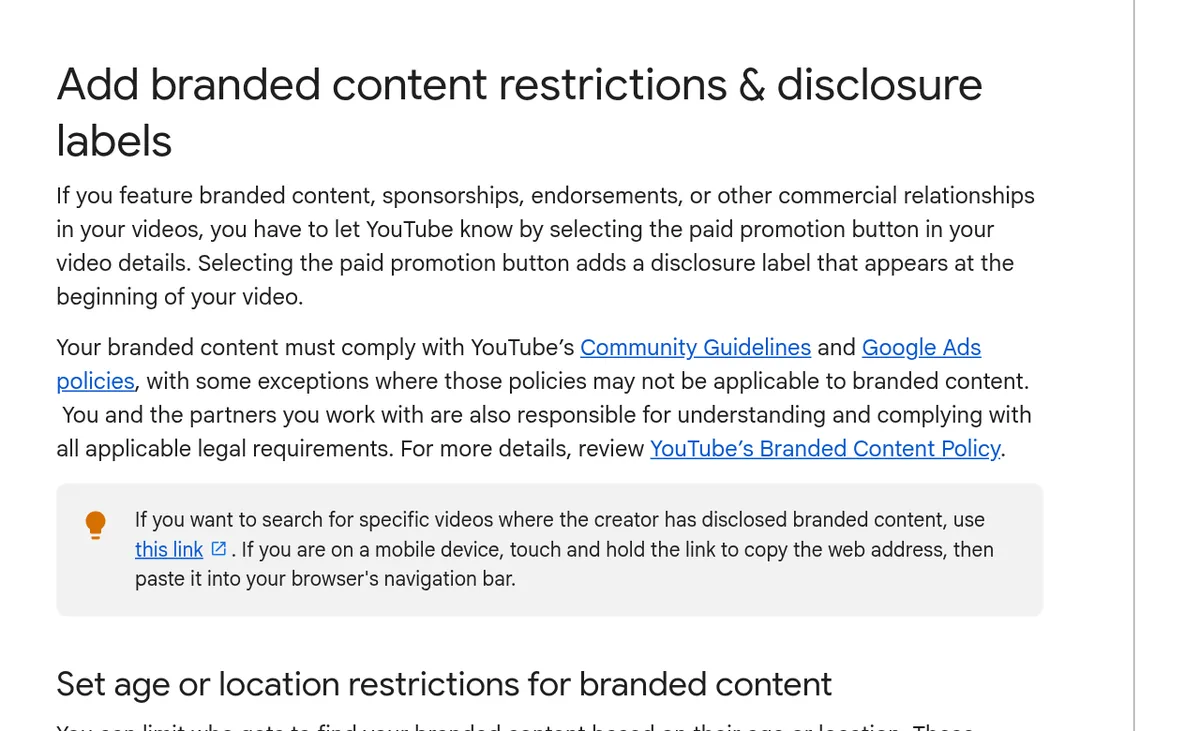
If you get paid by a brand for a video, YouTube also wants you to turn on its paid promotion setting. YouTube's help page says selecting the paid promotion button adds a disclosure label. The FTC adds that you should not rely on a platform's tool alone. Use it along with your own disclosure.
Instagram, TikTok, and Facebook
Put the disclosure at the start of the caption, before the MORE cutoff. On Stories and short videos, put it right on the image or video, big enough and long enough to read.
The FTC's Q&A says the text description on TikTok "is thus very unlikely to be clear and conspicuous" on its own. So add it on screen too. For more, see my guides on Instagram affiliate marketing, affiliate marketing on Facebook, and TikTok affiliate marketing.
Live streams
Say it more than once. People join live streams at different times. The FTC says the disclosure "should be repeated periodically" so people who see only part of the stream still hear it.
Put a short line near the link in the email, not only in the footer. Keep it close to the button or link.
Affiliate disclosure examples you can copy
Short and plain is best. Change these to fit your voice:
- Next to a link: I may get a commission if you buy through this link, at no extra cost to you.
- Top of a blog post: Some links in this post are affiliate links. If you buy through them, I may get paid. I only recommend tools I have used.
- Social post: Ad: I get paid if you buy through my link.
- Video, said out loud: Quick note, the link below is an affiliate link, so I may get paid if you use it.
- Free product: The brand sent me this for free to try.
The line about no extra cost is only true if it is true. Do not add it unless the price really is the same.
Amazon has its own required wording
If you are an Amazon Associate, Amazon's operating agreement requires you to clearly and prominently state this line, or a substantially similar statement it previously allowed: "As an Amazon Associate I earn from qualifying purchases." You still need to disclose near your links too. My Amazon affiliate program guide covers the other rules.
Tag your links for Google too
A disclosure is for people. A link tag is for search engines. Google asks you to mark links that are advertisements or paid placements (commonly called paid links) with rel="sponsored". I tag my affiliate links this way. Check your website builder's link settings for this option.
A disclosure does not fix a bad review
Disclosing is only half the job. The FTC's guide also says "You can't talk about your experience with a product you haven't tried." And if you thought it was bad, you cannot say it is great. Only recommend what you have used and would tell a friend about.
Should you also have a disclosure page?
Yes, it can help. Many sites have a page that explains how they make money and which programs they use. It is a good place for the full story.
But a page like that is extra, not a replacement. The FTC says a disclosure only on an About or profile page is likely to be missed. Keep the short note next to your links, and link to the full page if you want.
A simple disclosure page can cover:
- That some links on your site are affiliate links
- That you may get paid when people buy through them
- How you choose what to recommend
- That you only recommend tools you have used
Common disclosure mistakes
- Only a footer or About page note
- A hashtag like #aff buried at the end of a long caption
- Disclosing in the video description but not in the video
- Saying it once at the start of a long live stream
- Using a link that says DISCLOSURE instead of plain words
Affiliate disclosure check before you post
Nothing you check here is sent or saved. Download it if you want to keep it.
Meet AIM Agent
AIM Agent is an AI Chief of Staff for business owners. You give it a real task, and it brings the work back for you to review. You stay the one who approves.
Meet AIM AgentI am a co-founder of AIM Agent and have a financial interest in the product.
Frequently asked questions
What is an affiliate disclosure?
It is a short, clear note that tells people you may get paid if they buy through your link. It should sit right next to the link or recommendation.
Do I legally need an affiliate disclosure?
In the US, the FTC expects you to disclose a material connection, like a commission, when you recommend a product. Many affiliate programs, like Amazon Associates, require it too. This is general info, not legal advice.
Where should I put my affiliate disclosure?
Put it close to the recommendation, where people will see it without clicking MORE. A footer or About page note alone is likely to be missed.
Is #ad enough as a disclosure?
The FTC says terms like ad and sponsored can work if they are hard to miss. Do not bury #ad in a group of hashtags at the end of a post.
What is a good affiliate disclosure example?
A simple one is: I may get a commission if you buy through this link. Short and plain is best.
Do I need a disclosure in YouTube videos?
Yes. The FTC says to disclose in the video itself, ideally both said out loud and shown on screen, and also in the description near the links.
Sources
Checked October 25, 2026. Plans, prices, and rules can change.
